Fifth Grade Student and Teacher Design Review
As a designer who spends half the day digitizing and the other half troubleshooting stitch errors on my machine, I don’t just look at an embroidery file; I look at its potential in the real world. When Fifth Grade Student and Teacher Design landed in my inbox as part of a Freebies Graphics collection, my first instinct wasn’t to admire the colors on screen, but to ask: does this translate well to thread? Will it hold up after twenty washes? And most importantly, will it make a customer stop scrolling on Etsy?
The product description promises a "Colorful Graphic T-Shirt Design" suitable for hoodies, mugs, caps, and stickers. While that list is broad, my job is to narrow it down to where this design actually shines. After running some test stitches and visualizing various end products, here is my practical evaluation of how this design performs for craft business owners, handmade shop owners, and serious hobbyists.
First Impressions and Visual Personality
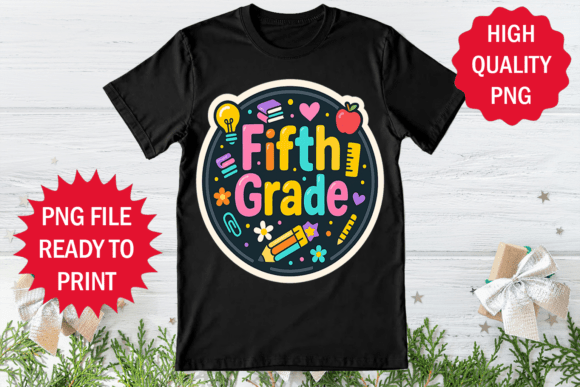
The moment you open the file, the energy is distinct. It feels celebratory, youthful, and slightly chaotic in a way that resonates with the back-to-school or teacher appreciation seasons. The layout suggests a graphic tee aesthetic, which means the negative space and focal points are already balanced for apparel. However, when moving from digital print to physical embroidery, we lose the subtlety of gradients and fine lines. We gain texture and dimension.
This design relies heavily on bold shapes and clear contrasts. That is a good sign. In the world of machine embroidery, clarity is king. If the original graphic has tiny details or thin lines, they often get lost in the fabric weave or turn into unsightly blobs of thread. Based on the visual personality of Fifth Grade Student and Teacher Design, it appears to utilize larger blocks of color and defined edges, which bodes well for satin stitches and fill stitches. It feels like a design meant to be seen from a distance, making it perfect for event wear or classroom gifts rather than subtle, high-fashion embellishments.
Real-World Application: Where Does This Fit?
Let’s talk about actual projects. I recently helped a client prepare merchandise for a local elementary school’s "Teacher Appreciation Week." They needed something affordable to produce in bulk but still felt personal. Fifth Grade Student and Teacher Design is a strong candidate for custom apparel, specifically t-shirts and sweatshirts. The colorful nature of the graphic works exceptionally well on neutral backgrounds like heather grey, white, or navy blue, allowing the threads to pop without overwhelming the garment.
But don’t limit yourself to shirts. Because the design has a "graphic" feel, it translates beautifully to accessories. Imagine this embroidered on a sturdy canvas tote bag design. The durability of the canvas complements the likely dense stitching of the graphic, creating a long-lasting product. For small business owners looking to expand their inventory, this design could also work on aprons for school staff rooms or even pillow covers for a teacher’s home office. It adds a touch of warmth and recognition to everyday items.
I also see potential in the gift market. Personalized gifts often struggle to find a middle ground between generic and overly specific. This design hits that sweet spot. It is thematic enough to be relevant for the end of the school year but general enough that it doesn’t need individualization to be meaningful. A mother buying this for her child’s favorite teacher knows exactly what message it sends. It boosts buyer engagement because it speaks directly to the emotional connection between student and educator.
Product Value and Brand Consistency
For Etsy sellers and craft fair vendors, presentation is everything. When you photograph your finished product, the embroidery needs to look crisp. Designs with high stitch density can sometimes look puffy or distorted if not stabilized correctly, which hurts brand consistency. However, if executed well, Fifth Grade Student and Teacher Design adds perceived value. It looks professional and intentional, distinguishing your handmade product from mass-produced printed goods. Customers are willing to pay more for embroidery because they can see the quality of the work—the sheen of the thread, the tightness of the stitches. This design leverages that tactile appeal effectively.
Technical Considerations and Cautionary Zones
Even the best designs have limitations. As an experienced reviewer, I must highlight where you should exercise caution. First, consider the hoop size. If this design is large, it may not fit comfortably on smaller items like baby clothes or small embroidered patches unless you use multi-hooping techniques, which increases production time. Always check the dimensions before committing to a product line.
Fabric choice is critical. This design is described as colorful and graphic, which implies a certain level of detail. Avoid using this on stretchy fabrics like thin jersey knits without proper stabilizer support, as the distortion can ruin the alignment of the text or graphics. Similarly, textured fabrics like bouclé or heavy wool can obscure the finer details of the design, making it look muddy. Stick to smooth, stable fabrics like cotton twill, fleece, or canvas for the best results.
Another area to watch is dark fabric. If the design relies on light-colored threads for highlights, contrast issues may arise on black or dark navy garments. Test your thread colors carefully. You might need to add an underlay stitch or choose a lighter base fabric to ensure the design remains legible. Also, be mindful of curved surfaces like caps. Embroidery on hats requires specialized hoops and careful tension adjustment; if the design is too wide, it may warp around the curve, distorting the intended shape.
Practical Designer Notes for Execution
Before you start producing these for your commercial embroidery projects, follow these steps to ensure success:
- Test on Scrap Fabric: Never run a new design directly onto your final product. Use scrap pieces of the exact fabric and stabilizer combination you plan to use. This helps you gauge stitch density and thread consumption.
- Check Stitch Density: High-density designs can cause fabric puckering. If the fill stitch areas look too thick, consider reducing the density in your digitizing software or adding more pull compensation.
- Review Small Details: Zoom in on the digital file. Are there any tiny elements that might break during stitching? If so, you may need to simplify the design or adjust the stitch type to running stitch instead of satin stitch for better durability.
- Black and White Mockups: Convert the design to grayscale to check contrast. If the design loses its definition in black and white, it might struggle to stand out in thread form against certain fabric colors.
- Stabilizer Selection: Use the correct stabilizer for your fabric. Cut-away stabilizers are generally safer for frequent washing, while tear-away might suffice for one-time use items like holiday gifts.
- Licensing Verification: Since this is listed under Freebies, always double-check the license terms. Even free files often come with restrictions on commercial use. Ensure you have the right to sell finished products made with this embroidery file before listing them on your shop.
Final Verdict
Fifth Grade Student and Teacher Design is a versatile, emotionally resonant asset for anyone in the crafting and apparel decoration space. It captures a specific moment in time—the bond between education and learning—and turns it into a tangible product. While it requires careful attention to fabric choice and stabilization, the payoff in terms of customer satisfaction and sales potential is significant.
Whether you are creating personalized gifts for friends, stocking your boutique with seasonal merch, or offering custom embroidery services to local schools, this design deserves a spot in your library. It is practical, visually appealing, and perfectly suited for the handmade market. Just remember: good embroidery is 10% design and 90% execution. Test thoroughly, stitch confidently, and let the quality of your work speak for itself.