Little Miss 100th Day Review
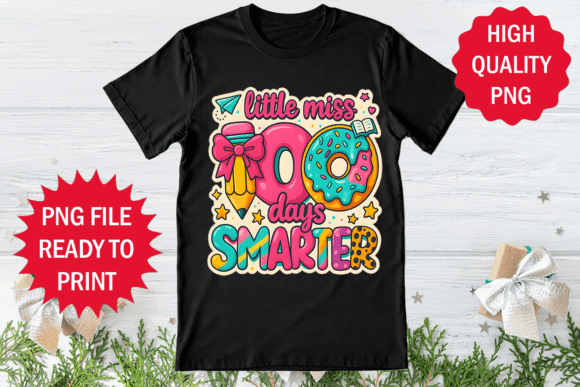
When I first pulled up the files for the Little Miss 100th Day of School T-shirt, I didn’t just see a graphic; I saw a potential bestseller for my upcoming craft fair booth. As someone who spends more time than I care to admit judging thread tension and stabilizer choices, I approach every new design with a mix of excitement and skepticism. This particular asset, categorized under Freebies and Graphics, promises a colorful, trendy aesthetic that screams "back-to-school season." But does it hold up when translated from a digital screen to actual fabric? That is the question that matters most to any serious embroidery designer or small business owner.
First Impressions and Visual Personality
The immediate mood of this design is undeniably cheerful. The title suggests a focus on young girls, and the visual execution delivers exactly that: playful, bright, and energetic. In the world of custom apparel, especially for children’s items like baby clothes or nursery decor, you need designs that pop without overwhelming the viewer. This piece strikes a balance. It feels modern enough for a boutique brand but simple enough to be recognizable even from a distance at a crowded craft fair.
From a layout perspective, the composition works well for standard placement areas. Whether you are planning to stitch this onto the left chest of a polo shirt or center it on the back of a hoodie, the proportions feel natural. The shapes are distinct, which is crucial for machine embroidery. When a design relies too heavily on fine lines or intricate details that might get lost in the stitching process, it often results in a muddy finish. Here, the core elements seem bold enough to maintain their integrity during the digitization and stitching phases.
Real-World Application: From Screen to Stitch
Let’s talk about how this would actually perform in a real project. Imagine you are preparing a batch of personalized gifts for a local school’s milestone event. You decide to create custom embroidered tote bags as party favors. The Little Miss 100th Day of School T-shirt design would translate beautifully here. On a canvas tote, the colors can really sing, and the sturdy fabric provides a stable base for whatever stitch density the file requires.
However, I also envision this design shining on softer garments. A sweatshirt embroidery application for a cozy autumn look is another strong contender. The trendiness of the graphic makes it suitable for older elementary students who want to celebrate the occasion in style rather than just wearing a generic logo. For an Etsy seller, this versatility is gold. You aren't limited to one product type. You could easily adapt this into a series of products: a cap for the class president, a pillow cover for a teacher’s desk, or even a kitchen towel for a "teacher appreciation" gift set.
The design also lends itself well to embroidered patches. If you are selling accessories, creating iron-on or sew-on patches of this motif allows customers to add a personal touch to backpacks or denim jackets. It transforms a static image into a wearable badge of honor for completing a hundred days of learning.
Where Caution Is Required
No design is perfect, and knowing where a design might struggle is just as important as knowing where it shines. With the Little Miss 100th Day of School T-shirt file, there are specific scenarios where you need to tread carefully. First, consider the hoop size. If the design includes extensive detail work, attempting to stitch it on a very small hoop might result in distortion or difficulty reaching all corners. Always check the bounding box before loading it into your machine.
Fabric choice is another critical factor. While this design looks vibrant on flat, woven cotton, applying it to stretchy fabrics or textured knits can be risky. Without proper stabilization, the stitch density might cause puckering, ruining the clean lines of the graphic. Similarly, if you plan to use this on dark fabric, you must ensure the thread colors have sufficient contrast. A light-colored graphic on a black shirt will require a substantial underlay or a different color strategy to remain visible.
I also advise caution when considering tiny lettering within the design. If the original graphic contains minute text, it may not reproduce clearly after stitching. Embroidery has physical limitations; threads have width. What looks like a crisp line on a monitor can become a blob on fabric if the scale is too small. Test this by viewing the design in a black-and-white mockup to assess contrast and legibility before committing to production.
Practical Designer Notes for Success
To get the most out of this digital embroidery file, follow these practical steps. Start by testing the design on scrap fabric that mimics the texture and weight of your final product. This helps you dial in your tension settings and choose the right stabilizer. For delicate items like baby embroidery, a tear-away stabilizer might be preferable, whereas heavier items like aprons might need cut-away support to prevent shifting.
Pay close attention to the thread colors. The original graphic likely uses a specific palette. Try to match your thread selection as closely as possible to maintain the intended mood. If you are using this for commercial embroidery or selling finished goods, double-check the licensing terms. Even though it is listed as a freebie, some designers restrict commercial use. Confirming these details protects your reputation and ensures you aren’t infringing on intellectual property rights.
Furthermore, think about the end-user experience. How will the finished product feel against the skin? Dense fill stitches can sometimes feel stiff or scratchy, particularly on sensitive areas like the neck of a t-shirt or the inside of a hat brim. If the design is intended for direct skin contact, consider adding a backing or ensuring the digitizer has used soft-edge techniques to minimize bulk.
Final Verdict
The Little Miss 100th Day of School T-shirt design is a solid addition to any embroiderer’s library. It captures the festive spirit of the milestone while offering enough flexibility to be used across a variety of merchandise. From tote bag design concepts to holiday embroidery projects, its utility is broad. For the craft business owner looking to capitalize on seasonal trends, this file offers high perceived value with relatively low effort, provided you execute the stitching with care.
It isn’t just a pretty picture; it’s a functional tool for building your brand. When presented correctly on quality materials, it signals professionalism and attention to detail. Customers can tell the difference between a mass-produced print and a carefully stitched handmade product. By taking the time to test, stabilize, and present this design thoughtfully, you can turn a simple graphic into a memorable keepsake that families will cherish long after the hundredth day of school has passed.
- Test on Scaps: Always run a test stitch on similar fabric to check for puckering.
- Check Contrast: Ensure thread colors stand out against your chosen background material.
- Verify Licensing: Confirm commercial rights before listing items on Etsy or other marketplaces.
- Stabilize Properly: Use appropriate backing to maintain shape on stretchy or heavy fabrics.